
Short answer: Three different tools. One is an 8-tonne long ram. One is a 3-tonne floor jack. The third is a pallet fork, and that fork is not a jack that goes under a car. The long-ram model VV-CGQJD-HODJ-8T says 8 tonnes and 8000 kg in the text, and the table says 8 tonnes / 7876 kg and a capacity of 8 T. The same text contains “8 tonnes/44102 cm”. 7876 kg, 8000 kg, 8 T and 44102 cm all stay. The minimum height is 66 cm, the maximum height is 116 cm, and the stroke row is labelled Stoke with the value 50 cm. The weight is 9.3 kg. The diameter is 7.5 cm, the piston is 3 cm, and the button hole is 1.7 cm. The page says the fork base goes on a workshop crane. This is not a low floor jack. The floor jack WD-A-03000-A00-0 lifts 130–500 mm in the text. The table does not repeat that range. The maximum lifting capacity is 3000 kg / 3 tonnes. The text says up to 3 tonnes and, in parentheses, 3 kg. 3 tonnes, 3000 kg and 3 kg all stay. The net weight is 33.48 kg. The size is 600 × 350 × 1140 mm. There is one piston. The pallet jack, model 2.5T, carries 2495 kg / 2.5 T. The forks are 122 × 68.6 cm in the text, with a width of 16.0 cm, and the table says 1220 × 685 mm with a single-fork width of 160 mm. The thickness is 5.08 cm in the text and 50 mm in the table. The height is 85–180 mm, and the text says 18.0 cm. The weight is 66 kg. It does not lift a car.
Products in this guide
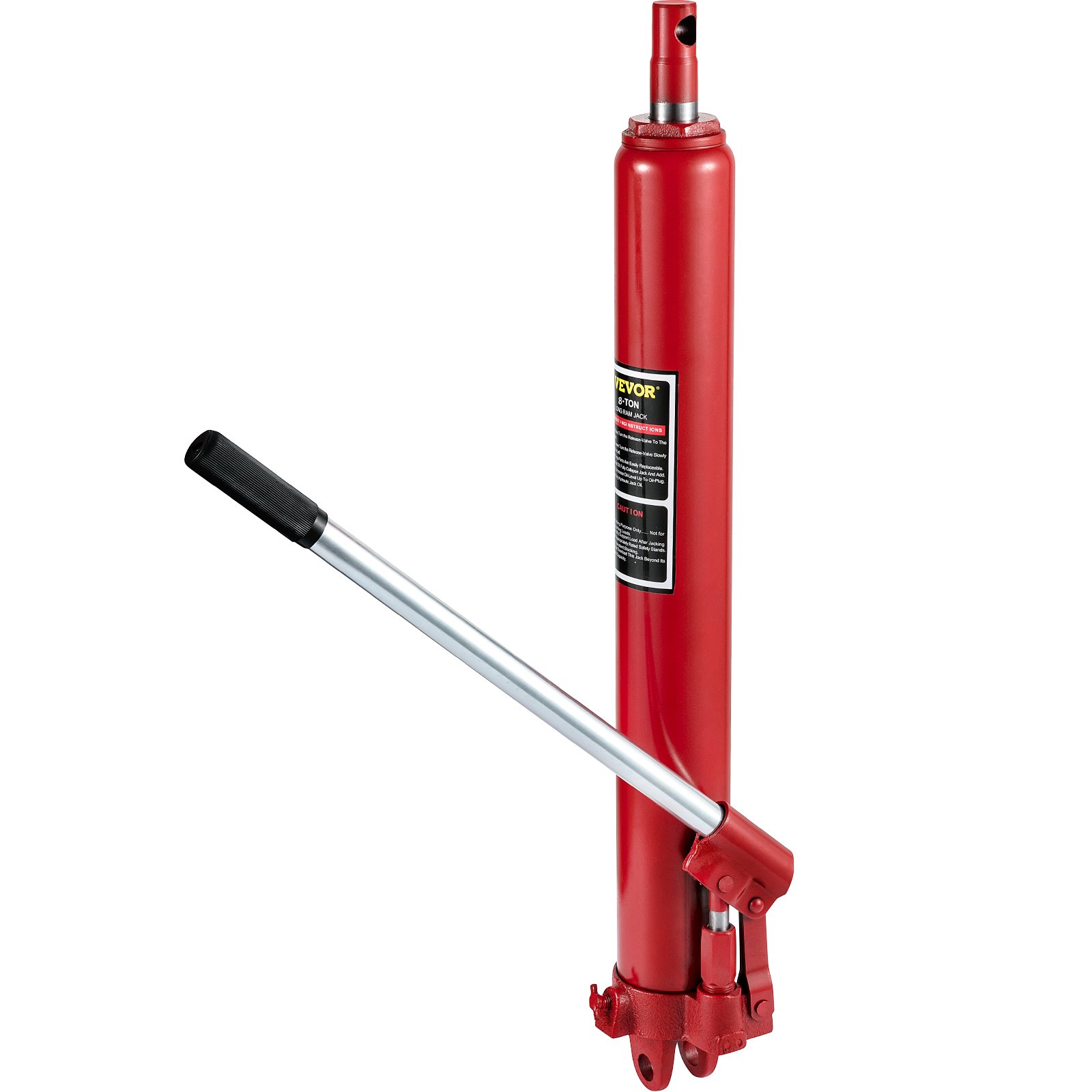 Long ram 66–116 cm, table 7876 kg77,90 €View →
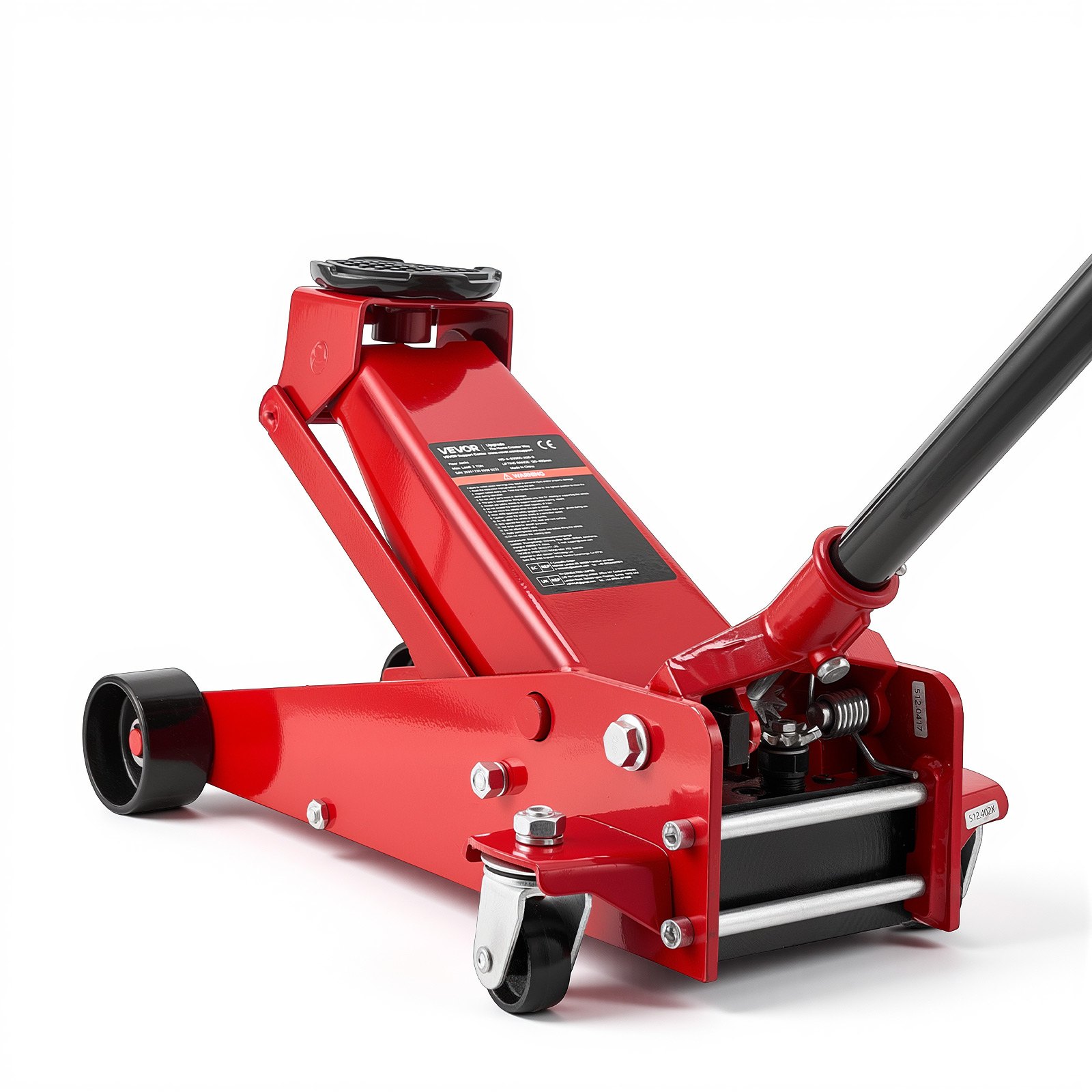 Floor 130–500 mm in the text, 33.48 kg324,90 €View →
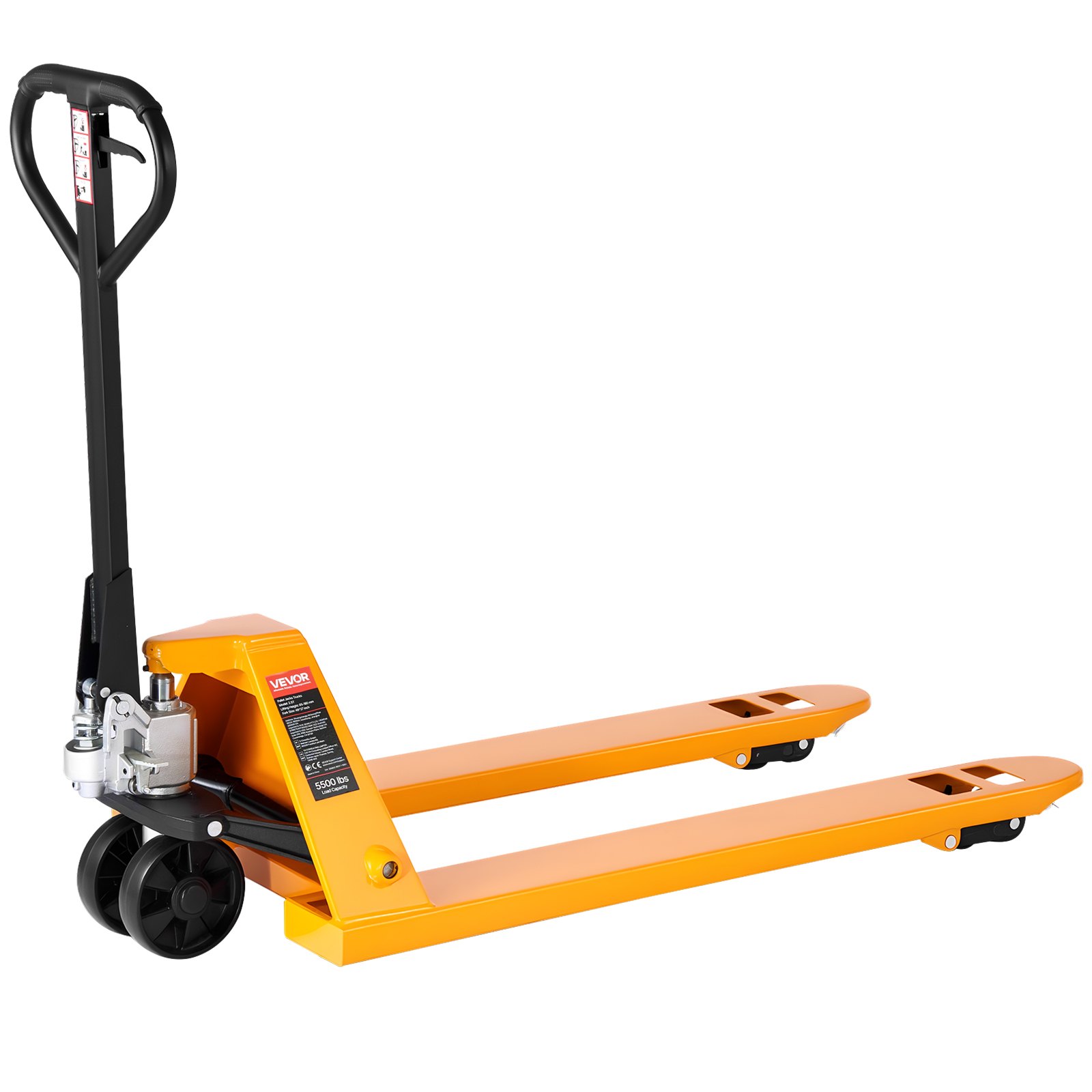 Fork 2495 kg, 85–180 mm, 66 kg1 219,90 €View →
66 cm is the long ram, and it is not the floor jack
The long ram’s minimum is 66 cm and its maximum is 116 cm. The 50 cm figure sits beside those two heights as its own row, and the label on that row is the word Stoke. The page does not give a millimetre for a car sill. It names a hydraulic crane, an engine hoist, and the fork base of a workshop crane. A saddle that slides under a sedan is not on this page. The fork base on this card is the part the page puts on the crane. It is not the pallet fork, and it is not a low floor jack.
The floor-jack text says 130–500 mm, and it says a low profile that slides under a sedan. The numbers 130 and 500 are not in the table. The product size is 600 × 350 × 1140 mm. 1140 mm is the third number of that size row. It is not the lift height. The lift height on this card is only in the text, as the range 130–500 mm. Read 500 mm there, in that text range, and leave it there.
The pallet fork moves through 85–180 mm. That range is the height of the base, and the text also says 18.0 cm. It is not a lift for a car. 180 mm is lower than the 500 mm written in the floor-jack text, and it is far below the long ram’s 116 cm. Those three figures answer three different questions: pallet fork height, floor-jack text range, long-ram maximum. They do not become one clearance.
500 mm, Stoke 50 cm and 1140 mm are three rows
Stoke 50 cm belongs to the long ram, next to 66 cm and 116 cm. 130–500 mm belongs to the floor-jack text, and the table on that page does not repeat it. 1140 mm belongs to the floor jack’s size row, 600 × 350 × 1140 mm, as the third number. The page does not declare these the same measurement. A stroke labelled Stoke, a text range that ends at 500 mm, and a size number of 1140 mm stay on the rows where they are printed. This guide does not add the minimum to the stroke, and it does not rename 1140 mm as a lift.
The long ram also states a diameter of 7.5 cm, a piston of 3 cm, and a button hole of 1.7 cm. Those three are on the long-ram card. The floor jack says one piston, and it does not repeat 7.5 cm, 3 cm or 1.7 cm. The pallet jack does not state them either. Copying the ram’s diameter onto the floor jack, or the floor jack’s 1140 mm onto the ram, would invent a row the card does not have.
A tonne, a kilogram, and one centimetre
The long-ram table writes 8 tonnes / 7876 kg, and it writes 8 T on its own. The text writes 8 tonnes/8000 kg. 7876 kg and 8000 kg are both on the card. The page does not correct one of them into the other. 8 tonnes, 8 T, 7876 kg and 8000 kg all stay. Anyone who keeps only 8000 kg has dropped the table. Anyone who keeps only 7876 kg has dropped the text. The card keeps both.
“44102 cm” stands in the same sentence, beside the tonne: 8 tonnes/44102 cm. The centimetre stays a centimetre. It is not read as kilograms, and it is not a second capacity that replaces 7876 kg or 8000 kg. It remains the figure the sentence prints, in centimetres, next to the tonne.
The floor-jack table is 3000 kg / 3 tonnes. The text is up to 3 tonnes, with 3 kg in parentheses. 3 kg is the parenthesis. It is not a table row, and it does not replace 3000 kg or 3 tonnes. 3 tonnes, 3000 kg and 3 kg all stay. The parenthesis is not a licence to call the table 3 kg, and the table is not a licence to delete the parenthesis. This is the 3-tonne card, with those three writings left as the page left them.
The pallet card is 2495 kg / 2.5 T, both in one cell. The page writes that pair and does not choose one figure and discard the other. 2495 kg stays 2495 kg. 2.5 T stays 2.5 T. This guide does not rewrite 2495 kg as 2.5 tonnes. The title’s letters 122 L and 68.6 W are on this card, the pallet card, and they are discussed below as letters in the title. They are not a capacity.
122 L and 68.6 W stay letters on the pallet card
The pallet title writes 122 L and 68.6 W. The body says the forks are 122 × 68.6 cm. The table says 1220 × 685 mm. 68.6 cm and 685 mm both stay, on the rows that print them. L in that title is not litres. W in that title is not watts. There is no litre row and no watt row hiding behind those letters. The floor jack and the pallet jack do not have a power row in watts. On the long ram, the word the page uses for power is hydraulic.
Fork thickness is 5.08 cm in the text and 50 mm in the table. Both stay. The width of one fork is 16.0 cm in the text and 160 mm in the table. That pair stays as well. The page already printed both members of each pair, so this guide does not collapse a pair into a single rewritten number. Height is 85–180 mm in the range, and the text says 18.0 cm. Those stay on the pallet card as the height writings the page gives.
Thickness, wheel and handle
A wheel of 17.8 cm, and a turn of 180°, appear only in the pallet-jack text. The pallet table does not give a wheel centimetre. The floor jack has two swivel wheels and two fixed wheels, an extended handle, a swivel saddle, and a non-slip rubber pad. It does not state a wheel diameter, so 17.8 cm is not moved onto it. The long ram has no wheel.
The pallet handle has three positions, and the page names them: lower the handle to lift, raise the handle to lower, and neutral to move. That is a pallet truck in a warehouse, a factory or a supermarket. It is not a procedure for a car.
The floor-jack page states its own sentences about the handle. It says the release valve is turned closed and the handle is pumped to raise, and that the handle is turned counterclockwise to lower. Those are the sentences on that card. This guide does not turn them into a lesson on jacking a car, and it does not add a bolt torque the page never prints. For a load that has to stay up, the same page says jack stands are used. It does not give a capacity for the stands, and it does not say whether a stand is in the box.
The long ram has a rubber handle, a Y-type polyurethane seal, and lead-free paint. Those are sentences on the long-ram page. The floor jack does not name that seal. The pallet jack does not name that seal. The long-ram page also has a sentence about a slow release, and it does not describe a button more precisely than that.
Weight and place
9.3 kg is the long ram. 33.48 kg is the floor jack. 66 kg is the pallet jack. On these three cards the heaviest tool is the pallet jack, and the load the page gives it is 2495 kg, the smallest load figure of the three. The lightest tool is the ram whose minimum is 66 cm, not the jack whose text says it slides along the floor under a sedan.
The floor-jack text names a sports car, a sedan, an SUV and a pickup, and it names a tyre, a brake and suspension. The long ram names a crane and an engine hoist. The pallet jack names a warehouse, a factory and a supermarket. The car list stays on the floor-jack page. It is not copied onto the ram, and it is not copied onto the pallet fork. The pallet fork does not go under a car. The ram’s 66 cm minimum is not the floor jack’s 130 mm text.
The boxes are 11.0 × 14.0 × 68.5 cm, 21.0 × 44.0 × 76.0 cm and 56.5 × 72.0 × 160 cm. An oil grade is not on any of the three pages. A bar is not on any of the three pages.
How to choose
Choose VV-CGQJD-HODJ-8T when the height starts at 66 cm and ends at 116 cm and the page is talking about a workshop crane. The table has 7876 kg. The text has 8000 kg. The same text has 44102 cm. The capacity writings also include 8 tonnes and 8 T. The weight is 9.3 kg. The stroke row says Stoke, 50 cm. Diameter 7.5 cm, piston 3 cm, button hole 1.7 cm. There is no sentence about sliding under a car. The fork base on this page goes on the crane.
Choose WD-A-03000-A00-0 when the text says 130–500 mm and under a sedan. The table is 3000 kg / 3 tonnes, and the text’s parenthesis is 3 kg. The net weight is 33.48 kg. The size is 600 × 350 × 1140 mm, and 1140 mm stays the third number of that size. The lift range is only in the text. There is one piston, two swivel wheels, two fixed wheels, a swivel saddle and a non-slip rubber pad. The car names on this card are the sports car, the sedan, the SUV and the pickup.
Choose model 2.5T when the fork carries 2495 kg / 2.5 T and the height is 85–180 mm, with 18.0 cm also in the text. The tool weighs 66 kg. The title’s 122 L and 68.6 W are letters on the fork’s measurements: the body says 122 × 68.6 cm, and the table says 1220 × 685 mm. Thickness stays 5.08 cm and 50 mm. One fork’s width stays 16.0 cm and 160 mm. The text’s wheel is 17.8 cm with a 180° turn. This is not a car jack. It does not belong under the question of what fits under a sill.
3 kg stays in the parentheses beside 3 tonnes, and 3000 kg stays in the table. 7876 kg stays beside 8000 kg. 5.08 cm and 50 mm both stay. 2495 kg is left written as 2495 kg, in the same cell as 2.5 T, and it is not replaced by another wording.
Comparison
| Product | Price | What sets it apart |
|---|---|---|
| Long ram 66–116 cm, table 7876 kg | 77,90 € | 8000 kg in the text, 44102 cm, crane |
| Floor 130–500 mm in the text, 33.48 kg | 324,90 € | parenthesis 3 kg, lift only in the text, saddle |
| Fork 2495 kg, 85–180 mm, 66 kg | 1 219,90 € | 2.5 T and 2495 kg, fork 5.08 cm and 50 mm |
The price in the link is the shop’s current price, and the link opens the product.
Who this does not suit
- One of the three is a pallet jack. It does not fit the question of what goes under a car.
- A 66 cm minimum is not a low floor jack. 130 mm is the text on the other page.
- 3 tonnes and the parenthetical 3 kg both stay. The table says 3000 kg.
- 122 L is not litres and 68.6 W is not watts. In the table the fork is 1220 × 685 mm.
Frequently asked questions
Do all three go under a car?
No. The floor-jack text says under a sedan, starting at 130 mm, and that range is only in the text. The long ram starts at 66 cm and goes on a crane. The pallet jack lifts the fork through 85–180 mm.
How many tonnes is the long ram?
The table says 8 tonnes / 7876 kg and 8 T. The text says 8 tonnes/8000 kg, and the same sentence has 44102 cm. All of them stay.
What is the 3 kg?
The floor-jack text puts 3 kg in parentheses after 3 tonnes. The table says 3000 kg / 3 tonnes. Both stay.
Is 2495 kg the same as 2.5 tonnes?
The page writes 2495 kg / 2.5 T on one line. It does not choose one figure and drop the other. 2495 kg is not rewritten here as 2.5 tonnes.
What are 122 L and 68.6 W?
They are letters in the title. The body says the forks are 122 × 68.6 cm. The table says 1220 × 685 mm. There are no litres and no watts.
How thick is the fork?
The text says 5.08 cm. The table says 50 mm. Both stay. The width is 16.0 cm in the text and 160 mm in the table.
Is 500 mm in the table?
No. 130–500 mm is the floor-jack text. The table has 3000 kg, the size and the weight.
How heavy is the tool?
9.3 kg, 33.48 kg and 66 kg. The heaviest is the pallet jack, whose load figure is 2495 kg.
What wheel does each one have?
The floor jack has two swivel wheels and two fixed wheels. The pallet jack’s text says 17.8 cm and a 180° turn, and the table has no wheel size. The long ram has no wheel.
How does it lower?
On the floor jack the card says the handle is turned counterclockwise. On the pallet jack the handle is raised to lower, and neutral is for moving. On the long ram there is a sentence about a slow release, and no more precise button. This is what the cards say. It is not a lesson in jacking a car.
Is a stand in the box?
The floor-jack text says jack stands are used for long-term support. The page does not say the stand’s kilograms, and it does not say whether a stand is in the box.
What is Stoke 50 cm?
It is the long ram’s stroke row: the label is Stoke and the value is 50 cm. The heights on that card are 66 cm and 116 cm. Stoke 50 cm is not the floor jack’s 500 mm, and it is not the 1140 mm size number.
What is the material?
The long-ram text says steel and lead-free paint. The pallet jack is carbon steel. The floor jack says full steel and does not give a grade.
Is 1140 mm the lift height?
No. It is the third number of the floor jack’s product size. The 500 mm lift is in the text.