
Short answer: Three plasma cutters, and the voltage on the card decides the socket. The 8.4 kg machine is the 220 V card. It is a contact cutter, the current is 20–50 A, the clean cut is up to 12 mm and the maximum cut is 16 mm. The input current on that card is 26 A. The two heavier machines are 400 V and three-phase. Both are 20–60 A, both have a clean cut of 18 mm and a maximum cut of 24 mm, and both have an input current of 12 A. One of them is also a contact cutter, at 8.7 kg. The other is 9.5 kg, non-contact, with a pilot arc, and it cuts a rusty surface without putting the tip on the metal. The boxes that list their contents list a torch, a ground clamp, an air hose and a filter regulator. A compressor is not in those lists. A 400 V machine does not start from an ordinary single-phase wall socket. A clean cut is not the maximum cut on any of the three.
Products in this guide
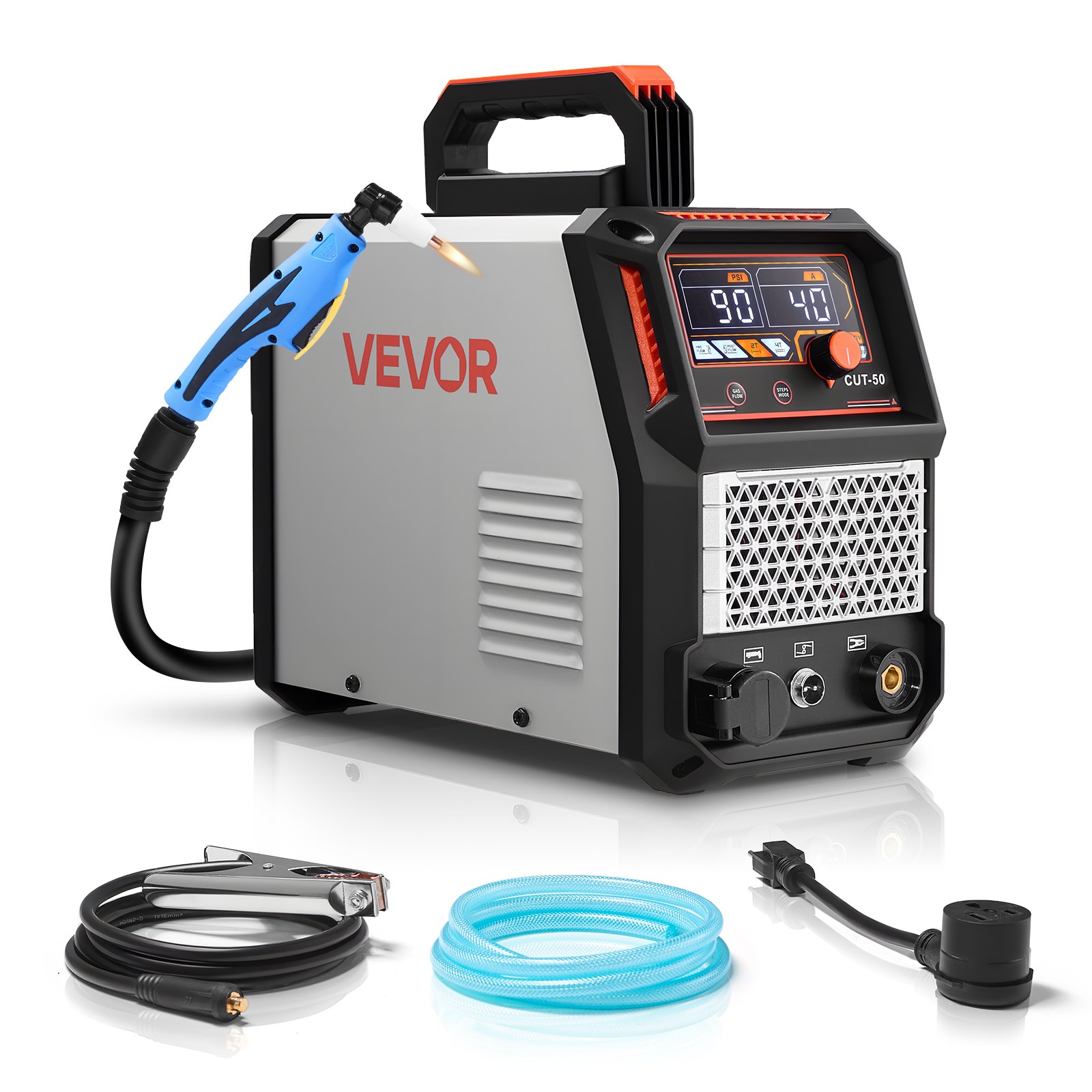 Plasma cutter 220 V, clean 12 mm263,90 €View
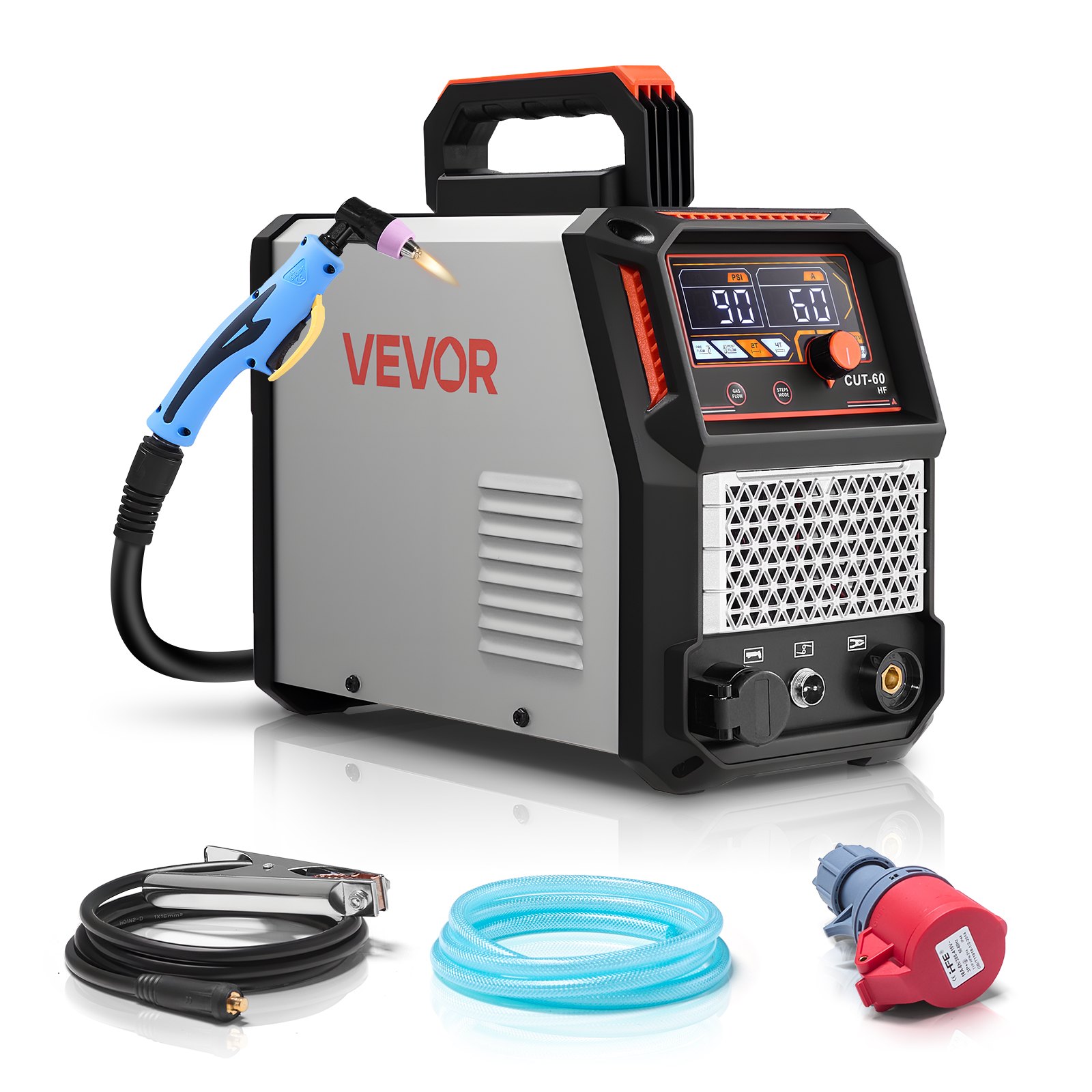 Plasma cutter 400 V, contact, clean 18 mm452,90 €View
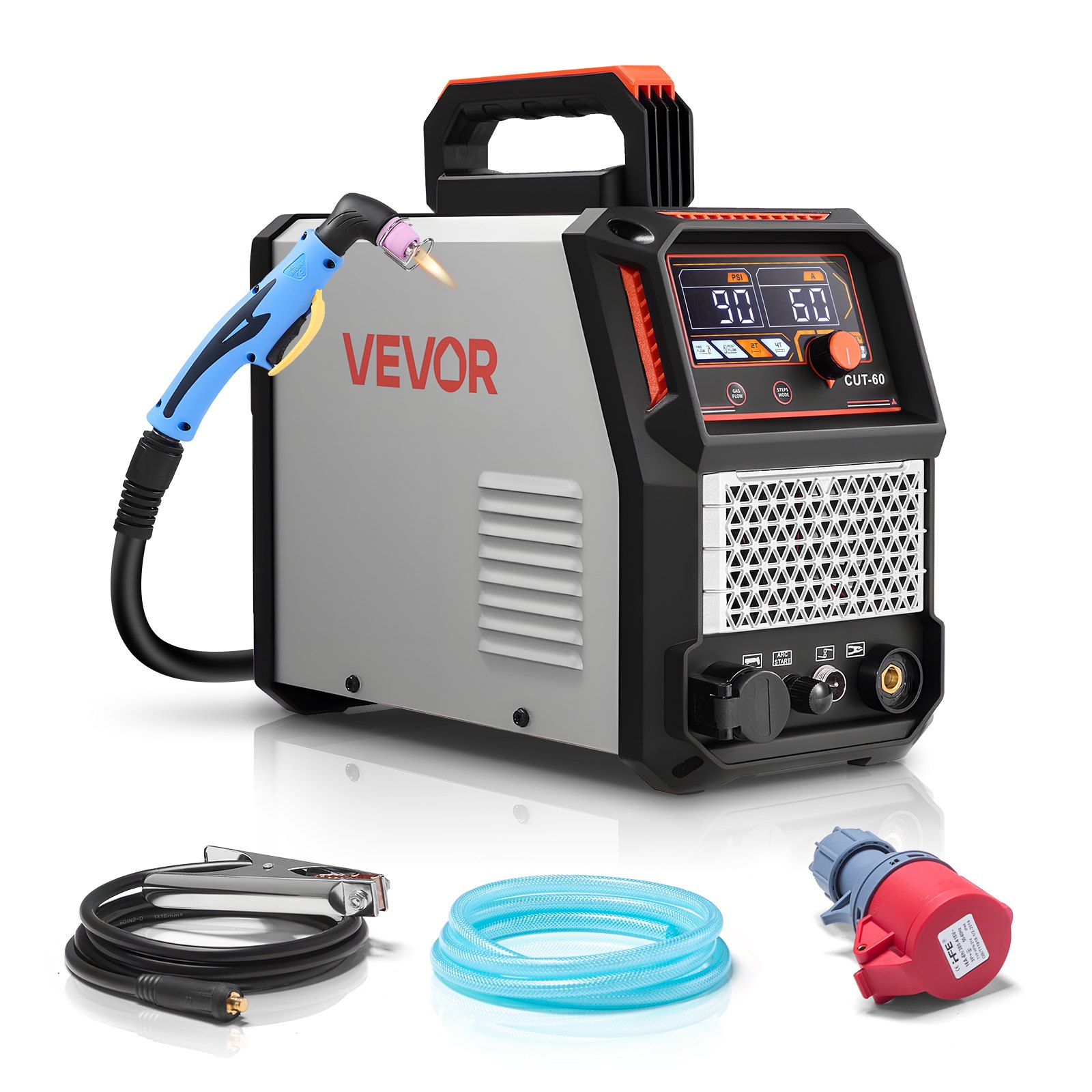 Plasma cutter 400 V, pilot arc, clean 18 mm517,90 €View
What a clean cut means, and what a maximum cut means
A clean cut is the thickness the machine cuts with a proper edge. On the 220 V machine that figure is 12 mm. On both 400 V machines it is 18 mm. A maximum cut is the thicker number, 16 mm on the 220 V card and 24 mm on each 400 V card. That thicker number is a ceiling. It is not the everyday working edge. The 12 mm line does not become 16 mm because both numbers sit on the same card, and the 18 mm line does not become 24 mm because both numbers sit on the two heavier cards. Each card keeps both figures, and each figure keeps its own name.
A sheet of 10 mm fits inside the clean cut of the 220 V machine, because 10 mm is under that card’s 12 mm. A piece of 20 mm does not. The 220 V machine’s maximum is 16 mm, so 20 mm is past that card, and the question moves to a 400 V machine. On a 400 V card the clean cut is still 18 mm and the maximum is 24 mm. 20 mm is inside that maximum and it is not the clean-cut figure. This guide does not call 20 mm a clean cut on any card, and it does not say the 220 V machine cuts 20 mm.
The current range is 20–50 A on the smaller machine and 20–60 A on the two larger ones. A higher ampere is for thicker metal. It is not for a prettier seam. 50 A stays on the 220 V card. 60 A stays on the two 400 V cards. The ranges are the cutting current. They are not the input current, which is a different row and is set out with the voltage.
The materials the page names are carbon steel, stainless steel, aluminium and mesh. The page does not allow cast iron, a painted thick beam, or several layers at once. Those three are not added by reading the metals that are named. A metal that is not in that list is not inferred from it.
220 V at home and 400 V in the workshop
The 220 V machine is the only one that goes on ordinary single-phase power. That is the 8.4 kg card, and the ordinary wall socket is stated for that card because that card says 220 V. The input current is 26 A. The page says directly: only 220 V, and there is no power adapter in the box. The plug has to match the wall socket the way the machine is built, without anyone converting the voltage in between. 26 A is what that card draws at the input. It is not the 20–50 A cutting range, and it is not a figure to copy onto a 400 V card.
The two larger machines want 400 V three-phase power. The input current is 12 A on each of them. The page says these are primarily industrial machines, and the place for them is the workshop that has that supply. A home garage that has only an ordinary wall socket is not the place for these two. If someone wants them on single-phase power, an inverter has to be found separately. That inverter is not in the box. The 12 A input is not the 20–60 A cutting range, and the 26 A of the 220 V card is not moved onto these two.
Voltage is not a shared label. 220 V stays on the 8.4 kg card. 400 V stays on the 8.7 kg card and the 9.5 kg card. A normal socket is claimed only where the card says 220 V. The workshop machines are the 400 V cards. Nothing in the guide turns a 400 V card into a 220 V card, and nothing turns the 220 V card into a three-phase machine.
Contact, or a pilot arc
Two machines are contact cutters: the tip of the torch touches the work. Those two are the 8.4 kg machine and the 8.7 kg machine. Contact is stated for those cards. The 9.5 kg machine is non-contact. A pilot arc lights before the metal and cuts a rough and rusty surface without direct contact, without putting the tip against the work. The point of that, on the page, is cut quality and a longer life of the wearing parts. It is not a larger millimetre. The millimetres on the 9.5 kg card are the same as on the 8.7 kg contact machine: a clean cut of 18 mm and a maximum cut of 24 mm. The pilot arc is not copied onto the two contact cards, and contact is not copied onto the 9.5 kg card as if the tip still had to touch.
All three have 2T and 4T. The page calls 2T semi-automatic cutting for short and precise work, and 4T automatic cutting for longer continuous work. Neither one changes the millimetres. 2T does not turn 12 mm into 16 mm, and 4T does not turn 18 mm into 24 mm. The clean cut and the maximum cut stay the figures already given for that card. 2T and 4T are on all three cards. They are not a reason to treat the three machines as one.
PT time is adjustable from 1 second to 6 seconds, and PA time is adjustable from 0.1 seconds to 3 seconds. These are times for the wearing parts. They are not the cut thickness. The display shows the setting. Overheating protection and overload protection are written on all three. The times stay times. A second is not a millimetre, and the protection lines do not add a thickness the card does not print.
The air that is not in the box
Plasma cuts with compressed air. The 220 V box lists a ground clamp with a 2 m lead, an air-filter regulator, a cutting torch, a 2 m air hose, PTFE sealing tape and four hose clamps. The 2 m lead is stated on that card. PTFE is stated on that card. A compressor is not in that list. The regulator is for air that comes from elsewhere. It is not a substitute for the air.
The 8.7 kg box lists a ground clamp, a filter regulator, a torch, a 2 m air hose, sealing tape, four clamps and a European industrial plug. The page does not separately state the length of that ground lead, so the 2 m lead from the 220 V list is not copied onto this card. The sealing tape on this card is not written as PTFE. The European industrial plug is written here. A compressor is not in this list either. The air still comes from elsewhere, and the regulator is for that air.
The 9.5 kg page does not write the accessory row out in the same way. The kit is not assumed to be identical to the neighbour’s list. The industrial plug is not copied onto it from the 8.7 kg list, and the PTFE tape and the 2 m ground lead are not copied onto it from the 220 V list. Before a purchase, that machine is read from its own page. A compressor is in a box only when that card says so. None of these lists says so. Compressed air remains a separate question on all three. Without compressed air the torch does not cut. That is the limit the page states. It is not a method.
How to choose?
If the supply is ordinary 220 V and the metal stays inside about 12 mm of clean cut, that is the 8.4 kg contact machine. Its maximum is 16 mm, and 16 mm is still the ceiling, not the clean cut. Its current is 20–50 A. Its input is 26 A. There is no power adapter in the box, and there is no compressor in the list.
If the workshop has 400 V on three phases and the pieces are thicker, up to an 18 mm clean cut, there are two larger machines. Both are 20–60 A, both have a maximum of 24 mm, and both draw 12 A at the input. A rusty and rough surface is the reason to take the non-contact pilot arc, the 9.5 kg machine. A smooth new sheet can be done with the contact cutter, the 8.7 kg machine. The millimetres do not decide that choice. The contact does.
If a 400 V machine is wanted at home on one phase, the inverter is not in the box. That is a separate decision. It is not part of the machine. The compressor is a separate question on all three. The 220 V card is the only card this guide puts on an ordinary wall socket.
Comparison
| Product | Price | What sets it apart |
|---|---|---|
| Plasma cutter 220 V, clean 12 mm | 263,90 € | 20–50 A, max 16 mm, 8.4 kg, contact |
| Plasma cutter 400 V, contact, clean 18 mm | 452,90 € | 20–60 A, max 24 mm, 8.7 kg, 3 phases, contact |
| Plasma cutter 400 V, pilot arc, clean 18 mm | 517,90 € | 20–60 A, max 24 mm, 9.5 kg, 3 phases, non-contact |
The price in the link is the shop’s current price and opens the product.
Who is this not for?
- A 400 V machine is not an ordinary wall-socket machine. The ordinary socket is the 220 V card.
- None of these comes with a compressor. Compressed air is separate, and a compressor is not in the lists the cards write.
- 16 mm and 24 mm are maximum cuts, not the thickness to cut every day with a clean edge. The clean figures are 12 mm and 18 mm.
- If the metal is thicker than the maximum of the machine that was chosen, another pass does not cut it thinner.
Frequently asked questions
Does a plasma cutter run from an ordinary wall socket?
Only the 8.4 kg machine, and that card is 220 V. The input on that card is 26 A, the page says only 220 V, and there is no power adapter in the box. The two larger machines are 400 V and three-phase. The page does not put them on one phase. An inverter has to be found separately, and it is not in the box. A home garage with only an ordinary wall socket is not the place for those two.
What is the difference between a clean cut and a maximum cut?
A clean cut is a proper edge: 12 mm on the 220 V machine and 18 mm on both 400 V machines. The maximum is the ceiling, 16 mm or 24 mm, not the everyday measure. The two numbers stay apart on every card. A higher figure does not rename itself as the clean cut.
Is there a compressor in the box?
No. The lists that are written out give a torch, a ground clamp, an air hose and a filter regulator. Compressed air comes from elsewhere. The 220 V list and the 8.7 kg list both omit a compressor. The 9.5 kg page does not repeat that accessory row, so its kit is not assumed from the neighbour, and a compressor is still not stated there.
What does a non-contact pilot arc mean?
The 9.5 kg machine lights the arc before the metal and cuts a rough and rusty surface without putting the tip against the work. The thickness does not grow from that. It is still a clean cut of 18 mm and a maximum of 24 mm, the same millimetres as the 8.7 kg contact machine. The page’s point is cut quality and a longer life of the wearing parts.
Do the two 400 V machines cut metal of different thickness?
No. Both have a clean cut of 18 mm and a maximum of 24 mm, and the current is 20–60 A. The difference is contact or a pilot arc, and the weight is 8.7 kg or 9.5 kg. The input current is 12 A on both. Thickness is not what separates them.
What do 2T and 4T mean?
The page calls 2T semi-automatic cutting for short precise work and 4T automatic cutting for longer continuous work. All three cards have both. Neither one changes the millimetres. The clean cut and the maximum cut stay the figures of that card.
What are the PT time and the PA time?
They are adjustable times for the wearing parts. PT is 1–6 seconds. PA is 0.1–3 seconds. They are not the cut thickness. The display shows the setting. Overheating protection and overload protection are written on all three, and those lines are not a thickness either.
Which metal does the page allow?
Carbon steel, stainless steel, aluminium and mesh. Cast iron, a painted thick beam and several layers at once are not allowed by the page. Another material is not inferred from this list.
How much current does the machine draw from the wall?
The 220 V machine draws 26 A. Both 400 V machines draw 12 A. That is the input current, not the cutting current of 50 A or 60 A. 20–50 A and 20–60 A stay the cutting ranges on the cards that print them.
Can a 20 mm piece be cut with the 220 V machine?
No. Its maximum is 16 mm and its clean cut is 12 mm. The page does not claim that this card cuts 20 mm. 20 mm is the area of the 400 V machines, and their maximum is 24 mm. Their clean cut remains 18 mm, so 20 mm is not that clean-cut figure either.
Is the industrial plug in every box?
A European industrial plug is written in the 8.7 kg kit. The 220 V machine says there is no adapter in the box, and it does not list that industrial plug. The 9.5 kg page does not repeat the same accessory row, so the plug is not copied onto it from the 8.7 kg list.
Is the machine light enough to carry to the job?
8.4 kg, 8.7 kg and 9.5 kg are the weight of the machine itself, without the compressor and without the hoses. The measure given with those weights is about 367 × 190 × 290 mm. The compressor is a separate thing to carry. The weight on the card is not the weight of a complete air supply.